At Mosaic we pride ourselves on being the UK’s first Jewish community that combines three active non-Orthodox denominations under one roof, but what do Liberal, Masorti and Reform actually stand for? What defines us? How do we differ and what do we have in common?
On sunday our Rabbinic Team defined and discussed their denomination, followed by a question and answer session.
On Tuesday, Michael Reik Introduced Joseph Gitler, Founder and Chairman of Leket , who explained the effects of the Covid Pandemic on Israel Society, and the work Leket is currently doing to address the growing need for food support.
In 2003 Joseph Gitler founded Leket Israel, The National Food Bank, as a one-man volunteer operation, to respond to the paradox of growing hunger and poverty in Israel on the one hand, and significant food and waste on the other. Today Joseph’s operation has grown to become the only food rescue and resource organisation in Israel, distributing over 50 million pounds of produce and perishable goods to over 250 non-profit organisations reaching more than 246,000 people in Israel weekly.
Joseph has received many awards, including the Presidential Award for Volunteerism from former President Shimon Peres, has been named as one of the 50 most influential Jews worldwide and, most recently, was selected to receive the 2018 Compassion Award for Children and Youth at risk.
On Sunday there was a presentation by Alka Kapoor, an artist who paints, works in clay and now primarily works with glass
Alka is a versatile artist who creates unique kiln formed glass flowers, vases, jewellery and much more. Her influence and inspiration comes from the beauty of colour and its endless possibilities. This is reflected in all of her unique work.
Josh Green was considered a pillar of the strictly religious Jewish community to which he belonged in northwest London. He was revered by all, including his five children and nineteen grandchildren. What would they think, if they knew of the dark, haunting secret he had concealed from them for fifteen years?
Now, aged almost seventy he has travelled to China on a sudden impulse, in an attempt to unveil an enigma which has tormented him for a decade.
A chance encounter in the Waldorf Astoria Hotel in Shanghai between Josh and a charming, erudite, gay British expat, evolves into an improbable friendship between these two strangers. Alistair Sylvester, a collector of rare Chinese snuff bottles and an expert on East Asian culture, is on his own perplexing quest. They join forces and embark on a voyage of discovery, taking them to totally unexpected and unlikely destinations, as they both attempt to unravel their own mystery.
Esther writes: When people ask me what I do, sometimes it takes me a while to gather my thoughts for an answer. I am aware of the many preconceptions many people have about Israel, and about Haaretz. There are also preconceptions about what an Israeli site in English covers, and about who actually reads us and where. Covering conflicts both simmering and spiking in Israel, the Middle East and the wider Jewish world is a complicated endeavour, often tumultuous, but also, I think, one of the most satisfying, intriguing and values-affirming jobs there is. In this discussion, I will attempt to open up the world of the Haaretz news room to you, talk about whether there is such a thing as objective coverage of Israel, how we think about antisemitism, and why opinion pieces can change the world.
Esther was born and grew up in London, educated at St Paul’s Girls’ School, studied English literature at Cambridge University and International Relations at LSE, and worked for the Union of Jewish Students, where she met Paul, married and made aliyah at the end of 1998. After ulpan, Esther worked for a think tank (precociously) building economic ties between Israel and the Arab world, but on her way to a meeting in Ramallah, two Israeli soldiers were lynched there, the second intifada erupted and she had to find another job. She survived two years of working as a strategic consultant for Deloitte and Touche before re-immersing into the world of politics and analysis, writing and researching reports for international institutions.
Jonathan talked about his experience as a Liberal Jew in the Jewish education world from Stamford Hill to Stanmore, and contrasted it with being a secular teacher, Secondary Head Teacher and DfE adviser.
He outlined some of the challenges for both Jewish and secular education today and asked the question ‘What should education be for?’
Jonathan has had a varied career, from teaching science, and being a Headteacher in deprived London schools, to recent experience leading the only national orthodox Jewish teacher training establishment to outstanding Ofsted success.
Adam LeBor is the thriller critic of the Financial Times and a veteran former foreign correspondent for several national newspapers who lived in Budapest for many years. Dohany Street, the third volume in the trilogy featuring Gypsy detective Balthazar Kovacs, is inspired by and draws on Adam’s deep personal connection with Budapest and the city’s tangled, often dark, history.
Dohany Street is the location of the largest synagogue in Europe. The thriller turns on the disappearance of Elad Harari, a young Israeli historian who was investigating what happened to the assets of Hungarian Jews murdered in the Holocaust.
Dohany Street was described by The Financial Times as ‘Such a sure-footed piece … LeBor’s non-fiction books demonstrate a panoramic grasp of geopolitical issues, so it’s no surprise that such underpinnings are so adroitly drawn here – but never at the expense of narrative bravura.’
Adam is the author of seven novels and eight non-fiction books, including City of Oranges: An Intimate History of Arabs and Jews in Jaffa, which was shortlisted for the Jewish Quarterly Wingate Prize, and Hitler’s Secret Bankers, which was shortlisted for the Orwell Prize. His books have been published in fourteen languages and he also writes for The Critic and The Times among other publications. He is an editorial trainer and writing coach and teaches creative writing for several organisations. Adam lives in north London with his family.
Luke is qualified on many counts on these subjects. Luke is not Jewish but has been a committed Zionist all his life. He topped the poll in the 2020 ballot for the Labour Party National Executive Committee. “We believe in Israel” is a BICOM initiative, with 24,000 supporters and Luke as its director since 2011. He was previously the award-winning director of Global PR Company, Weber Shandwick.
Important periods of Luke’s life include graduating in Politics from Bristol University 1993; He was Vice-President European Community Organisation of Socialist Youth, 1997-2001; He stood as Labour Party Candidate in Aldershot 2001 and as Labour Party Candidate for Castle Point in 2005; He was the winner of Public Affairs News UK Political Consultant of the Year in 2008. He was a member of Labour Party National Executive 2010-2012 and 2020
On Tuesday Dr Daniel Grant was interviewed by Steve Levinson,.
Daniel is a doctor with a background that’s out of this world. Daniel has worked in the extreme environments both at the very top of the Alps, deep underwater and all the way over at NASA. He now specialises in preventative health where he translates the learnings from space into everyday life. His work ranges from community sport and social prescription, through to empowered biomarker healthcare, and to Stealth Health – the art of keeping you healthy without you ever knowing it.





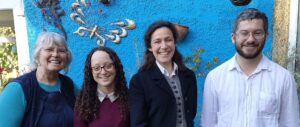 “Deconstructing the Denominations”
 On Tuesday, Michael Reik Introduced Joseph Gitler, Founder and Chairman of Leket , who explained the effects of the Covid Pandemic on Israel Society, and the work Leket is currently doing to address the growing need for food support.
 On Sunday there was a presentation by Alka Kapoor, an artist who paints, works in clay and now primarily works with glass
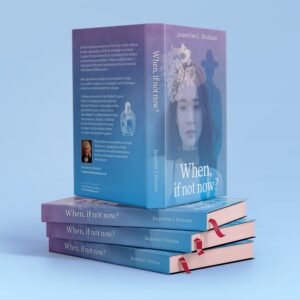 On Sunday, Jackie Shulman talked about her first novel ‘When, if Not Now?’
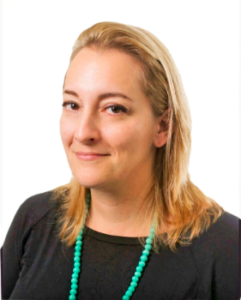 On Tuesday, Steve Levinson interviewed Esther Solomon.
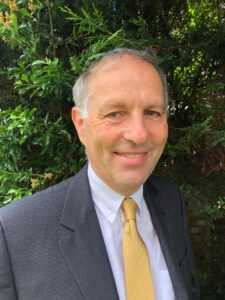 On Sunday we met Jonathan Bach Headteacher, Educator and Outsider in the Orthodox World
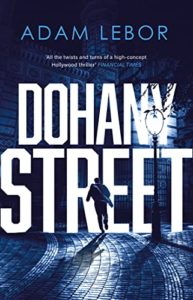 On Tuesday the author and journalist Adam LeBor was interviewed by Alex Gerlis .
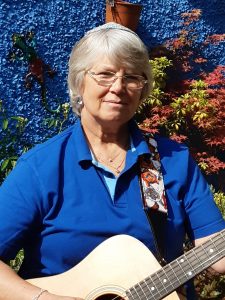 On Sunday afternoon we spent a wonderful hour with Rabbi Rachel Benjamin and her guitar for a sing-along session of popular and well-known songs.
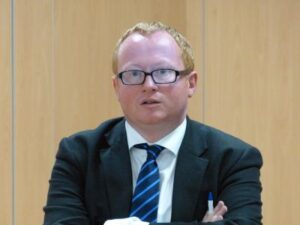 On Tuesday, Steve Levinson interviewed Luke Akehurst on two major subjects of concern:
 On Tuesday Dr Daniel Grant was interviewed by Steve Levinson,.